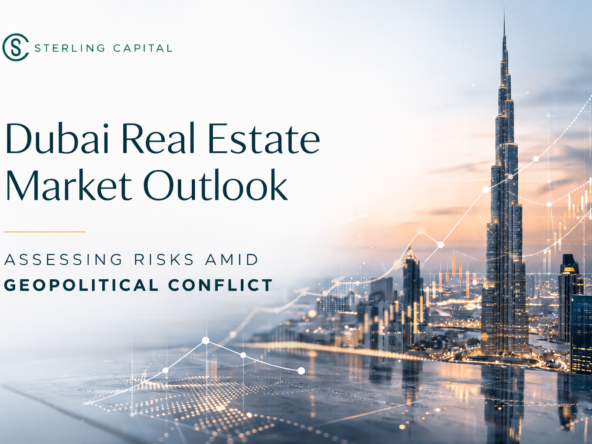

As global investors assess opportunities in the post-pandemic landscape, comparisons between Dubai in 2025 and New York in the 1920s and 1930s have become more frequent. At the heart of this analogy lies a fundamental economic narrative—a city-state rapidly transforming into a global hub through strategic policy, financial liberalization, and ambitious infrastructure expansion. While historical parallels offer valuable insights, the question remains: Is Dubai truly on the trajectory of New York’s economic ascent a century ago, or is it charting a unique path in the global economy?
An Economic Hub in Transition
The 1920s marked New York’s rise as the world’s financial capital, fueled by Wall Street’s rapid expansion, industrial innovation, and speculative investment. Similarly, Dubai has positioned itself as a leading financial and business center, attracting multinational corporations, sovereign wealth, crypto investors, and high-net-worth individuals seeking a low-tax, business-friendly environment. The emirate’s financial ecosystem, anchored by the Dubai International Financial Centre (DIFC) and Nasdaq Dubai, continues to deepen capital markets, with an increasing volume of IPOs and venture capital inflows.
However, unlike New York’s ascent driven by organic capital accumulation, Dubai’s growth has been strategically engineered through government-backed free zones, regulatory flexibility, and investment incentives. This intentional economic planning sets Dubai apart, offering investors a level of policy predictability that was absent in 1920s New York.
Real Estate & Infrastructure: A Century Apart, Yet Strikingly Similar
New York’s skyline boom in the early 20th century—marked by the construction of the Empire State Building, Chrysler Building, and Rockefeller Center—symbolized its economic dynamism. Dubai’s 21st-century parallel is equally ambitious: Burj Khalifa, Museum of the Future, Palm Jebel Ali, and Dubai Creek Tower reflect its commitment to architectural dominance and real estate expansion.
Much like New York’s property boom, Dubai’s real estate sector has become a magnet for global capital, with foreign investors driving demand for branded residences, waterfront properties, and off-plan developments. However, Dubai’s growth is unfolding in a far more digitally interconnected and monetary policy-driven world, raising the question ofwhether its current market cycle will sustain long-term appreciation or enter speculative overheating.
Migration, Entrepreneurship, and the Talent Economy
One of the most compelling similarities between New York’s 1920s boom and Dubai today is the role of migration in shaping economic dynamism. New York became a cultural and economic melting pot due to an unprecedented influx of immigrants, fueling its labor force, innovation, and consumer base.
Dubai, in contrast, has built a highly curated immigration model, attracting expatriate professionals, entrepreneurs, and digital nomads through its Golden Visa program, flexible residency policies, and a tax-free income structure. This strategic approach has transformed Dubai into a magnet for global talent, reinforcing its position as a leading business hub for technology, finance, and creative industries.
The Role of Speculation: Then and Now
The Roaring Twenties were characterized by speculative investments across real estate, equities, and emerging industries, ultimately culminating in the 1929 stock market crash and the Great Depression. Today, Dubai’s economic growth is similarly supported by high levels of foreign investment, rapid real estate price appreciation, and a strong reliance on external capital flows.
However, key differences remain—unlike New York’s laissez-faire environment of the 1920s, Dubai operates within a highly regulated and centrally planned economic framework. This mitigates certain financial risks while ensuring sustained economic stability through government intervention when necessary.
Dubai’s Unique Trajectory in the Global Economy
While the comparison to New York’s early 20th-century ascent is compelling, Dubai is not simply following history—it is redefining it. Unlike New York, which grew organically through industrialization and financial capitalism, Dubai’s expansion is the result of deliberate policymaking, strategic diversification, and an adaptable economic model.
The city’s unique positioning as a luxury tourism, technology, and financial hub suggests that while Dubai shares New York’s historical energy and momentum, its path forward is uniquely modern and globally interconnected.
For investors, the key question is not whether Dubai is the new New York, but rather: What new global economic order is Dubai helping to shape?